Celebrating South African honey
South Africa has an extraordinary range of landscapes and flora, and yet the differences between its honeys are still largely undiscovered. Hive & Earth exists, in part, to change that.
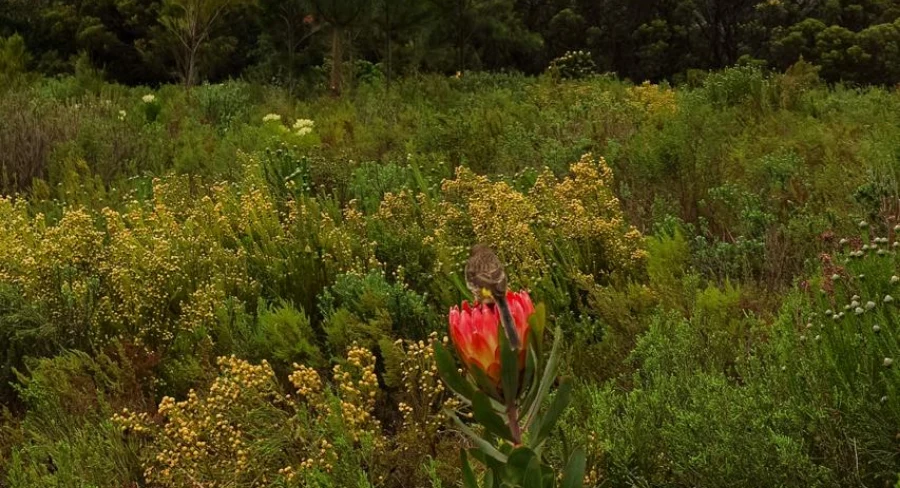
We want people to taste why Fynbos is nothing like Bluegum. To discover what the Kalahari produces when its hardy trees come into bloom. To notice what a sea breeze gives a Strandveld honey. And to understand why a particular region, season or flowering can produce something that may never taste exactly the same again.
Rather than standardising those differences away, we celebrate them. They are what make real honey remarkable.
Our origins, honey by honey
Each of our honeys carries the character of one place and one season.
Here is where each of them comes from.
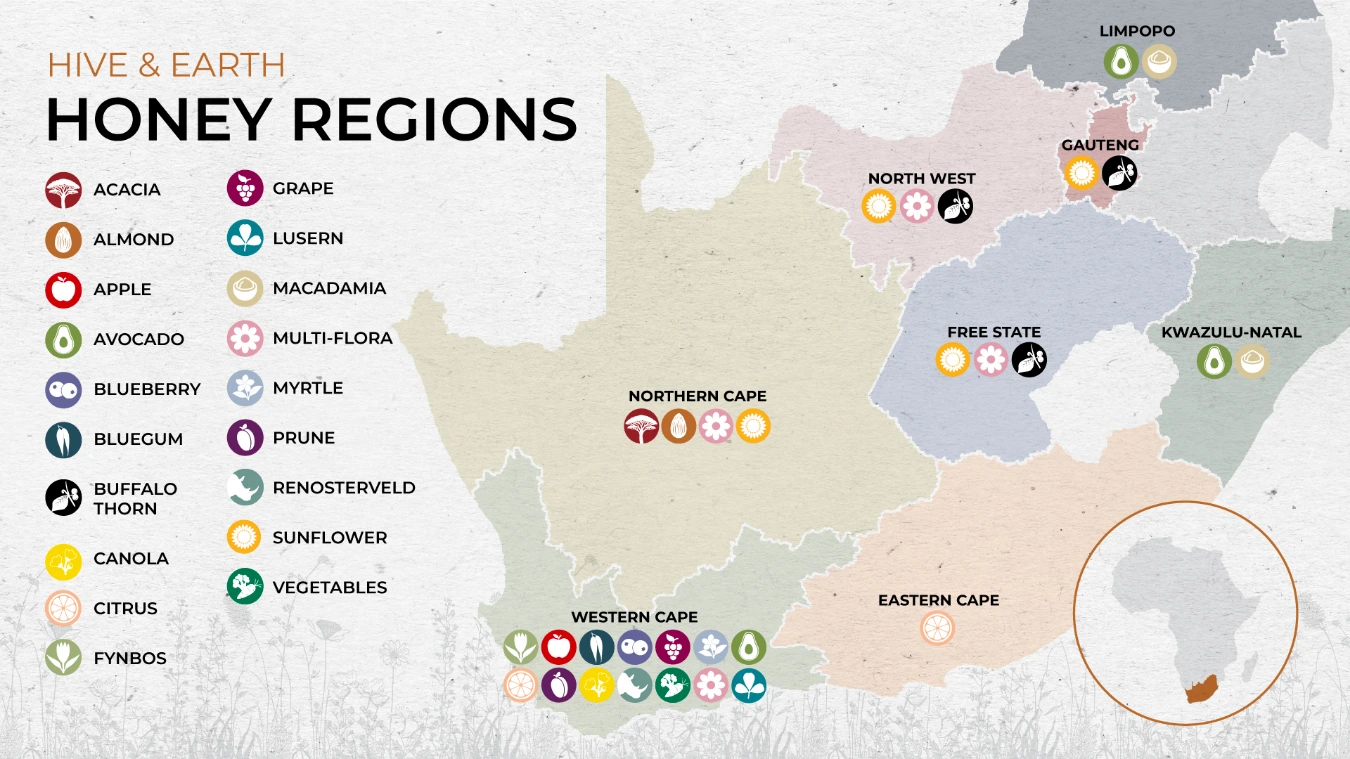
Our honey producing regions run from the Cape Floral Kingdom and the Overberg through the Strandveld and Renosterveld to the Kalahari Rooisand in the Northern Cape, and north into the Buffalo Thorn country of the North West, Free State and Gauteng.
Some honeys cannot be made twice
Bees forage on whatever is flowering around them, which means an exceptional honey begins with an exceptional landscape and a season that cooperates.
Some of our harvests are naturally limited by rainfall, climate and flowering conditions. When a Beekeeper’s Reserve or a seasonal harvest sells out, it does not simply come back in stock. The next release is a different honey from a different moment.
We would rather offer you something genuinely tied to a place and a season than something available all year because it has been blended to stay the same.